

Step-by-step guide to letting property in Dublin: max income
- bryanlittle1
- Mar 27
- 8 min read

Rental demand across Dublin and Kildare has rarely been stronger. Average rents for a three-bed in Kildare hit €2,382 in the third quarter of 2025, up 8% year on year, and Dublin figures are climbing in step. That is good news for landlords, but new legislation, tighter compliance rules, and deposit limits mean the margin for error has shrunk considerably. Get the process right and you will enjoy strong, stable income. Miss a step and you could face fines of up to €15,000. This guide walks you through every stage, from your legal obligations to finding the right tenant and maximising your return.
Table of Contents
Key Takeaways
Point | Details |
Comply with all legal steps | Register with the RTB, meet minimum standards, and understand your legal obligations to avoid penalties. |
Stay informed on rent levels | Use local market data and the RTB register for pricing to avoid over- or under-charging. |
Preparation boosts income | Professional cleaning, staging, and BER upgrades result in higher rents and faster lettings. |
Thorough tenant screening | Examining references and using an inventory safeguard long-term rental success. |
Professional help reduces risk | Letting agents handle compliance, marketing, and tenant management for greater income and lower stress. |
Understanding your obligations as a landlord
Before you advertise your property, you need to know exactly what the law requires of you. Ireland’s rental sector is regulated by the Residential Tenancies Board (RTB), and ignorance of the rules is not a defence.
Here are the core obligations every landlord must meet:
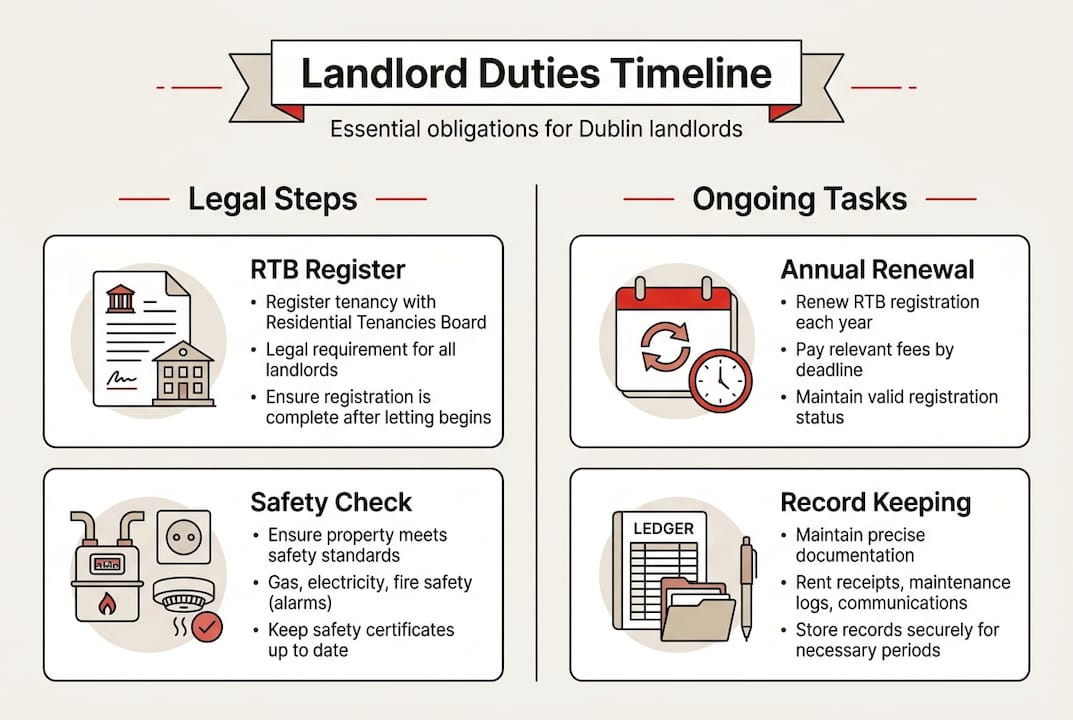
RTB registration: Register every tenancy within 30 days of its start date and renew annually.
BER certificate: A valid Building Energy Rating (BER) certificate is required before you can advertise.
Minimum standards: Your property must meet standards on heating, water supply, ventilation, and electrical safety.
Deposit limits: You can only charge a maximum of one month’s rent as a deposit.
Rent receipts and documentation: Provide written rent receipts and a copy of the lease to every tenant.
The 2026 legislative reforms are particularly important. From March 2026, tenants gain stronger security of tenure after six months, and the grounds on which you can end a tenancy have been tightened. Understanding your full responsibilities as a landlord before you start will save you significant stress later.
Obligation | Deadline or limit |
RTB tenancy registration | Within 30 days of start |
Annual RTB renewal | Every 12 months |
Maximum deposit | 1 month’s rent |
Maximum penalty for non-compliance | €15,000 |
BER certificate | Required before advertising |
Pro Tip: If this is your first time letting, working with an experienced agent from the outset is one of the smartest moves you can make. Read these estate agent letting tips to see exactly where professional guidance adds value.
Once you understand what is required of you, it is time to look at market conditions and what you can realistically earn.
Setting the right rent: market trends in Dublin and Kildare
Pricing your property correctly is one of the most important decisions you will make. Set rent too low and you leave money on the table. Set it too high and you extend your void period, which costs far more in the long run.
Here is a snapshot of current average rents across the region:
Property type | Dublin average (2026) | Kildare average (2026) |
Studio | €1,520/month | N/A |
1-bedroom | €1,920/month | €1,600/month |
2-bedroom | €2,490/month | €2,050/month |
3-bedroom | €3,100/month | €2,382/month |
These figures reflect a market where national supply sits critically low at around 1,800 to 1,900 available homes. That scarcity drives rents upward, but it does not give landlords unlimited freedom to charge what they like.
If your property sits within a Rent Pressure Zone (RPZ), rent increases are capped. You must use RTB register comparables to justify your asking price, and you cannot reset to market rate after a no-fault eviction. These rules catch many landlords off guard.
Key insight: Setting rent at the right level from day one reduces tenant turnover, which is one of the biggest hidden costs in letting.
For a deeper look at how the local market is moving, our Dublin and Kildare market overview breaks down the trends in detail. You can also explore what drives Dublin property values, understand rental yield in Ireland, and review the latest Kildare housing trends to sharpen your pricing strategy.
With market insights in hand, you can now focus on preparing your property to achieve its full rental potential.
Preparing your property for letting success
First impressions matter enormously in the rental market. A well-presented property lets faster, attracts more reliable tenants, and commands a higher rent. The investment in preparation almost always pays back quickly.
Follow this preparation checklist before you go to market:
Complete all outstanding repairs, including plumbing, electrics, and any structural issues.
Deep clean the entire property, including carpets, windows, and kitchen appliances.
Repaint walls in neutral tones to maximise appeal to a wide range of tenants.
Stage key rooms with clean, simple furnishings if the property is to be let furnished.
Commission professional photography and, where possible, a virtual tour.
Prepare a detailed written inventory of all contents and their condition.
Professional presentation is not optional if you want to achieve the best rent. Agents and landlords who invest in quality photos and staging consistently outperform those who do not.

Energy efficiency is increasingly important to tenants. Staging can add €50 to €150 per month to achievable rent, while a BER upgrade can increase your rental value by 5 to 10%. That is a meaningful return on a relatively modest investment.
Pro Tip: A property with a BER rating of B or above is not only more attractive to tenants but may also qualify for better mortgage terms if you refinance. Our home preparation guide covers practical steps that apply equally to letting. You can also find advice on listing your property online to maximise visibility.
With your property ready for the market, the next step is finding and securing the right tenant.
Finding and screening tenants
Where you advertise and how you screen applicants will determine the quality of your tenancy. The most common platforms in Ireland are Daft.ie and MyHome.ie, and a listing on both significantly increases your reach. Agent websites add further exposure, particularly for higher-value properties.
Here is a step-by-step approach to tenant selection:
List on Daft.ie and MyHome.ie with professional photos and a detailed description.
Respond to enquiries promptly. Delays lose good applicants to other properties.
Conduct viewings in person and note how applicants interact with the property.
Request proof of income or employment, ideally covering three months.
Take up at least two references, including a previous landlord where possible.
Use a written tenancy agreement and detailed inventory from day one.
Many landlords underestimate the time and skill involved in tenant screening. A bad tenancy can cost thousands in lost rent, legal fees, and property damage.
Approach | Time required | Compliance risk | Void risk |
DIY letting | High | Higher | Higher |
Professional agent | Low | Lower | Lower |
Pro Tip: An agent’s knowledge of local demand means your property is priced and presented to let quickly. Review our expert letting advice for a full breakdown of what professional support delivers.
Next, ensure you stay compliant both at the start of the tenancy and throughout.
Compliance, registration, and routine management
Registering your tenancy and keeping paperwork in order is not a one-off task. It is an ongoing responsibility that runs for the entire duration of the letting.
Follow these steps to stay on the right side of the RTB:
Register the tenancy online within 30 days of the start date, providing property details, landlord details, and the BER certificate.
Renew registration every 12 months without fail.
Keep signed copies of the lease, inventory, and all correspondence with your tenant.
Respond to maintenance requests promptly and document all repairs.
Follow the correct notice periods and procedures if you ever need to end a tenancy.
Important: Non-compliance penalties reach €15,000, covering offences such as overcharging rent, failing to register, and improper eviction procedures.
The RTB can investigate complaints from tenants and initiate its own inquiries. Keeping thorough records is your best protection. Your ongoing landlord obligations are clearly set out by Citizens Information and are worth reviewing regularly.
Pro Tip: If managing compliance feels overwhelming, outsourcing to a letting agent removes most of the administrative burden. Our letting compliance tips explain exactly what agents handle on your behalf.
Having covered ongoing management, let us look at how to get the most from your investment.
Maximising income and avoiding costly mistakes
Strong rental income does not happen by accident. It comes from consistent attention to pricing, presentation, and compliance. The landlords who earn the most are those who treat letting as a business.
Here are the most effective strategies for maximising your return:
Upgrade your BER rating. Energy improvements boost achievable rent and reduce void periods by attracting quality tenants.
Price accurately from the start. Overpricing extends voids. One extra month empty at €2,000 costs more than a year of modest underpricing.
Use professional management. Agents deliver lower vacancy rates, faster re-letting, and fewer compliance breaches.
Review rent at the correct intervals. In an RPZ, you can only increase rent every 12 months and must follow the correct procedure.
Avoid deposit overcharging. Charging more than one month’s rent as a deposit is a breach that the RTB takes seriously.
Letting agent fees typically run at around one month’s rent plus VAT for tenant placement, or 8 to 12% of monthly rent plus VAT for full management. When you weigh that against the cost of a void period, a compliance fine, or a difficult tenancy, professional management often pays for itself.
Pro Tip: Review our guide on letting mistakes to avoid before you go to market. The most costly errors are almost always avoidable with the right preparation.
How RE/MAX helps you let confidently in Dublin and Kildare
Letting a property in today’s market requires local knowledge, compliance awareness, and professional marketing working together. That is exactly what we offer at RE/MAX Partners.

Our team handles everything from rental appraisals and RTB registration to tenant screening and ongoing management, so you can enjoy your rental income without the administrative burden. We use professional photography, virtual tours, and targeted digital marketing to reduce void periods and attract reliable tenants. Whether you own a single property or a portfolio, our property services are built around your goals. Contact RE/MAX Partners today to request a free rental appraisal and find out what your property could achieve in the current market.
Frequently asked questions
How do I register a tenancy with the RTB?
You must register online with the RTB within 30 days of the tenancy start date and renew that registration every 12 months.
What documents do I need before letting out my home?
You will need a valid BER certificate, proof that your property meets minimum standards, a signed tenancy agreement, and a written inventory.
What are the main costs involved in letting a property?
Expect costs for repairs, staging, RTB registration, and agent fees if used. Agent fees run at roughly one month’s rent plus VAT for placement, or 8 to 12% of monthly rent for full management.
How can I increase my rental income legally?
Upgrade your BER rating, stage the property professionally, and set rent using the RTB rent register to ensure you are pricing correctly for your area.
What are the new 2026 rules for eviction and rent resets?
From March 2026, rental reforms give tenants stronger tenure rights after six months and remove the landlord’s ability to reset rent to market rate following a no-fault eviction.
Recommended


Comments