

Why Dublin Home Values Rose 2.7% in 2023: Key Factors
- kbyrne
- Feb 28
- 9 min read

Despite interest rates climbing throughout 2023, Dublin residential property prices increased by 2.7%, defying conventional wisdom that higher borrowing costs automatically suppress home values. Understanding what drives property values helps you make smart selling, buying, or renting decisions. This guide clarifies key economic, supply, regional, and policy factors that impact property prices in Dublin and Kildare.
Table of Contents
Key Takeaways
Point | Details |
Price Growth Amid Rate Rises | Dublin’s 2023 home prices rose 2.7% despite rising interest rates, while areas outside Dublin saw 5.7% growth. |
Supply Constraints Drive Prices | Low housing stock reported by 71% of agents continues to push prices upward despite increased completions. |
Regional Variation Matters | South Dublin saw 4.3% growth while Dún Laoghaire-Rathdown managed only 1.2%, showing significant local differences. |
Economic Fundamentals Support Demand | Income growth and strong employment in tech sectors maintain buyer demand even as affordability tightens. |
Policy Shapes Market Access | Government mortgage schemes and first-time buyer supports influence who can enter the market and at what price points. |
Understanding Dublin and Kildare Housing Market Trends
Dublin residential property prices increased by 2.7%, while areas outside saw 5.7% growth in 2023. Recent price growth is modest in central Dublin but stronger in commuter and suburban areas. The median prices show wide variation, with €720,000 in affluent Blackrock contrasting sharply with €165,000 in less expensive regions.
Prices within Dublin vary significantly by area due to local economic conditions and desirability. South Dublin’s prices grew 4.3%, while Dún Laoghaire-Rathdown managed only 1.2%, showing intra-regional disparities. Greater price growth outside Dublin reflects supply and demand changes in surrounding counties like Kildare.
Regional price variations across Dublin and Kildare reflect these dynamics:
Region | Median Price | Annual Change |
Blackrock, Dublin | €720,000 | 3.8% |
South Dublin | €485,000 | 4.3% |
Dublin City | €395,000 | 1.5% |
Dún Laoghaire-Rathdown | €625,000 | 1.2% |
North Kildare | €385,000 | 5.2% |
Key factors driving these regional differences include:
Employment concentrations in tech hubs creating localised demand
Transport infrastructure affecting commuter appeal
School catchment areas influencing family buyer preferences
Local amenity development impacting neighbourhood desirability
Planning permissions affecting new housing supply rates
Understanding these Dublin and Kildare market trends helps you assess whether current conditions favour buyers or sellers in your specific area. Check official Dublin property price data regularly to track your local market.
Key Macroeconomic Influencers on Property Values
Rising interest rates increased mortgage costs, lowering affordability for many buyers. Yet the median mortgage approval amount rose slightly amid 11.5% more approvals in May 2023. This paradox reflects income growth partly offsetting affordability challenges, maintaining demand strength.
Employment concentration in tech sectors supports steady housing demand. Dublin’s multinational employer base creates consistent buyer pools even during economic uncertainty. Government support for first-time buyers cushions market pressure amid tighter credit conditions.
Macroeconomic forces shaping buyer behaviour include:
Central Bank mortgage rules capping loan-to-income ratios at 3.5 times salary
Help to Buy scheme providing up to €30,000 for new home purchases
Wage inflation in high-earning sectors maintaining purchasing power
Remote work policies expanding commuter zone viability
Inflation affecting construction costs and new build pricing
These recent Dublin housing market trends show how multiple economic factors interact. Understanding the Irish property market overview helps you anticipate how rate changes might affect your property’s value.
Pro Tip: Monitor the European Central Bank’s interest rate decisions quarterly. Rate changes typically affect buyer sentiment within 60 to 90 days, creating windows of opportunity for sellers before demand adjusts downward or upward based on affordability shifts.
The Dublin cost of living context matters when setting realistic home prices because buyers calculate total monthly housing costs including utilities, transport, and local services alongside mortgage payments.
Supply Factors and Housing Completions Impact
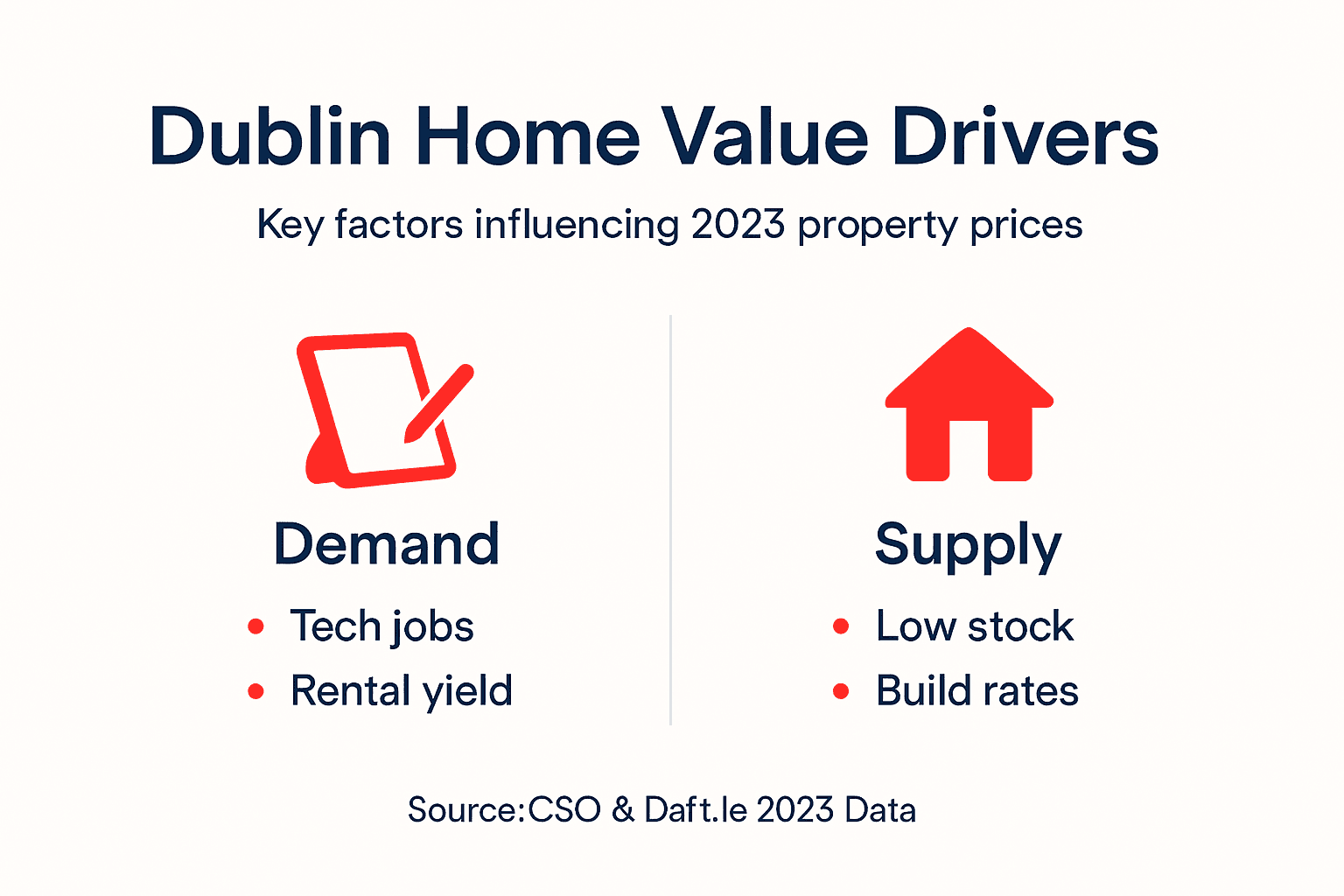
Despite a 19.1% increase in completions, supply growth remains below demand in Dublin and Kildare. Regulatory challenges and construction productivity slow the effective increase in available homes. 71% of agents report low property stock levels despite rising completions, highlighting persistent supply shortages.

Supply shortages fuel price inflation even amid more construction activity. The gap between completions and household formation continues widening, creating sustained upward pressure on values.
Housing supply constraints include:
Constraint Type | Impact on Supply | Effect on Prices |
Planning Delays | 12-18 month approval times | Reduces new stock flow |
Labour Shortages | Construction slowdowns | Increases build costs |
Material Costs | 15-20% price rises | Pushes up new home prices |
Land Availability | Limited zoned sites | Restricts development scale |
Regulatory Compliance | Higher development costs | Filters into sale prices |
These supply dynamics directly affect understanding property valuation factors because scarcity premiums add value beyond intrinsic property characteristics.
Pro Tip: Track latest housing completions data for your county quarterly. Rising completions in your immediate area might signal upcoming price moderation, while continued low supply suggests prices will hold firm or increase further.
New developments typically take 24 to 36 months from planning approval to completion. Understanding this pipeline helps you anticipate whether current supply constraints will ease or persist in your target timeframe for selling or buying.
Challenging Common Misconceptions About Property Prices
Myth: High prices are only due to strong buyer demand. Reality includes supply constraints and regulation playing crucial roles beyond simple demand factors. Prices reflect complex interactions between multiple forces, not single causes.
Myth: Interest rate hikes automatically cause prices to fall. Actual data shows continued growth in Dublin despite rising borrowing costs. Government policies and market dynamics create a complex picture beyond simple economic assumptions.
Common misconceptions that mislead market participants:
Believing rental yields alone determine investment value ignores capital appreciation potential
Assuming all Dublin areas move in sync overlooks significant regional variation
Thinking new builds always cost more misses incentives and Help to Buy benefits
Expecting prices to crash based on international comparisons ignores Ireland’s unique supply constraints
Presuming interest rates are the only affordability factor neglects income growth and policy supports
“Supply shortages, regulatory constraints, and construction issues play a crucial role beyond simple demand factors. Markets don’t move on single variables but on the interaction of multiple forces working simultaneously.”
Understanding market myths and realities helps investors and homeowners avoid flawed decision making. The relationship between interest rates and prices is mediated by supply availability, making simplistic predictions unreliable.
Price resilience during rate increases demonstrates that when supply remains constrained, demand shifts but doesn’t collapse. Buyers adjust by purchasing smaller properties, seeking cheaper areas, or delaying rather than abandoning homeownership entirely.
Regional Dynamics and Demand Drivers
High concentration of tech employment in Dublin creates strong rental and purchase demand. Companies like Google, Facebook, and Amazon employ thousands of well-paid workers seeking housing near offices or along transport corridors. South Dublin leads price growth while Dublin City and some areas show price slowdowns or declines.
Migration and cosmopolitan buyers increase demand diversity and regional price variation. International professionals bring different housing expectations and budgets, affecting local market dynamics. Landlord and investor activity affects local supply-demand balance, particularly in rental markets.
Regional demand drivers shaping price patterns:
Luas Green Line access commands 8% to 12% price premiums over comparable non-serviced areas
Proximity to top-performing secondary schools adds €40,000 to €70,000 to family home values
Walkable neighbourhood scores correlate with 5% to 9% higher prices in urban areas
New office developments signal future employment growth, creating anticipatory price rises
Retail and leisure facility improvements boost local desirability within 12 to 18 months
These Kildare housing dynamics show how commuter towns capture overspill demand from Dublin’s high prices. Understanding regional demand factors helps you identify emerging value areas before prices fully reflect improved amenities or transport links.
North Kildare towns like Leixlip, Maynooth, and Celbridge benefit from dual advantages of lower prices than Dublin and excellent motorway access. These areas attract young families priced out of South Dublin while maintaining reasonable commute times to city centre employment.
Rental Market Trends Influencing Property Values
Average Dublin rent sits around €2,700 per month, reflecting strong tenant demand. This high rental income supports investor confidence and property values. Regulatory complexity causes some landlords to leave the market, tightening rental supply further.
Despite supply constraints, rental demand remains high, supporting investor buying decisions. Students, young professionals, and international workers compete for limited rental stock, maintaining upward pressure on rents and therefore investment property values.
Rental market factors affecting property values:
Gross rental yields of 4% to 5.5% remain attractive compared to deposit rates under 3%
Rent pressure zones limit annual increases to 2%, affecting investor return calculations
Residential Tenancies Board registration requirements add compliance costs
Tax treatment of rental income influences landlord participation rates
Professional property management costs typically consume 8% to 12% of rental income
These rental market impacts on valuation mean investment properties trade at premiums where rental demand is strongest and most stable. Areas with large student populations or corporate lettings show different yield patterns than family rental zones.
Tenant profiles directly influence property values because different groups offer varying rental security and maintenance considerations. Corporate lets to multinational employees typically provide stable, premium rents but require higher specification finishes. Student lets generate lower per-room rents but allow multi-occupancy arrangements that can boost total yields.
Applying Knowledge for Market Decisions
Assess local supply-demand conditions before setting prices or listing your home. Check how many properties are currently for sale in your area compared to typical stock levels. Monitor interest rate and income trends to gauge buyer affordability in your price bracket.
Consider regional desirability, employment concentration, and migration for investment location choices. Stay updated on government policies affecting mortgage lending and first-time buyer support, as these directly influence your potential buyer pool.
Framework for applying market knowledge:
Research comparable sales in your specific neighbourhood from the past three months, not citywide averages
Calculate the supply-demand ratio by dividing available properties by average monthly sales volume
Assess whether your property appeals to first-time buyers, families, or investors, then check relevant policy supports
Review planning applications for major developments within 2km that might affect future desirability
Consider timing your sale to coincide with peak buying seasons in spring and autumn when market activity increases
Factor in macroeconomic forecasts for the next 12 to 18 months when deciding whether to sell now or wait
Use these homeowner selling strategies to maximise your property’s value. The property buying guide Ireland helps buyers understand what sellers prioritise. Follow home selling preparation tips to position your property competitively.
Pro Tip: Create a decision matrix scoring potential properties or sale timing against the factors explained in this guide. Weight supply constraints, regional demand, and policy supports according to your specific circumstances. This structured approach prevents emotional decisions and keeps you focused on fundamental value drivers.
Consider relocation decision factors holistically, weighing property value trends against lifestyle, employment, and family needs. Property values matter, but they’re one component of successful housing decisions alongside personal circumstances and long-term plans.
Explore Your Property Options with RE/MAX Leixlip
Navigating Dublin and Kildare’s complex property market becomes simpler with expert local guidance. RE/MAX Partners in Leixlip offers deep knowledge of regional price trends, supply conditions, and buyer demand patterns that directly affect your property decisions.

Our team understands the factors explored in this guide and applies them daily to help clients achieve optimal outcomes. Whether you’re ready to browse current property listings, need a professional home sales valuation, or want to explore rental property services, we provide the expertise and market insight you need. Access up-to-date market knowledge tailored to your specific area and circumstances, ensuring your property decisions align with current conditions and future trends.
Frequently Asked Questions
What are the main factors affecting Dublin home values?
Supply constraints remain the primary driver, with 71% of agents reporting low stock levels despite increased completions. Interest rates, employment concentration in high-paying sectors, regional desirability variations, and government mortgage policies also significantly influence prices. These factors interact rather than operating independently, creating complex local market dynamics.
Why did Dublin prices rise despite higher interest rates in 2023?
Persistent supply shortages outweighed the dampening effect of higher borrowing costs. Income growth in key employment sectors maintained buyer purchasing power, while government first-time buyer supports cushioned affordability pressures. The 19.1% increase in completions still fell short of demand, keeping upward pressure on prices across most Dublin areas.
How do Kildare property values compare to Dublin?
Kildare properties typically cost 20% to 40% less than comparable Dublin homes while offering larger properties and gardens. North Kildare towns within commuting distance saw 5.2% price growth, slightly outpacing Dublin’s 2.7% increase. Kildare attracts buyers priced out of Dublin who prioritise space over proximity to city centre employment.
What should I consider when timing a property sale?
Assess your local supply-demand balance by comparing current listings to typical stock levels. Spring and autumn traditionally see higher buyer activity, creating competitive bidding conditions. Monitor interest rate trends and upcoming policy changes that might affect buyer affordability. Factor in any planned local infrastructure or employment developments that could boost values further.
How do rental yields influence property investment decisions?
Gross rental yields of 4% to 5.5% provide attractive returns compared to deposit accounts, supporting investment demand. However, regulatory compliance costs, rent pressure zone restrictions, and tax treatment significantly affect net returns. Investors increasingly favour areas with stable tenant demand from professionals or students rather than chasing maximum yields in less secure rental markets.
Will Dublin property prices continue rising in 2024 and beyond?
Continued supply constraints suggest price stability or modest growth rather than significant increases or declines. Economic conditions, interest rate trajectories, and government housing policies will moderate the pace of growth. Regional variation will persist, with some areas seeing stronger appreciation than others based on local employment, transport, and amenity developments.
Recommended


Comments