

Role of Auctions in Selling Property: 80% Sell in 6-8 Weeks
- kbyrne
- Mar 2
- 10 min read

Many property owners in Co Kildare and Co Dublin mistakenly believe auctions mean discounted, rushed sales. In reality, auctions create competitive bidding environments that often drive final prices above seller expectations. This article explains how property auctions work, the legal framework protecting sellers, optimal timing strategies, and whether auction selling suits your home. You will learn practical steps to prepare your property for a successful auction sale that delivers both speed and strong prices.
Table of Contents
Introduction To Property Auctions In Co Kildare And Co Dublin
Legal Framework And Seller Responsibilities In Property Auctions
Practical Steps To Prepare Your Home For Auction In Co Kildare And Co Dublin
Explore RE/MAX Partners’ Auction And Property Sales Services
Frequently Asked Questions About Selling Property At Auction In Co Kildare And Co Dublin
Key Takeaways
Point | Details |
Legally Binding Sales | Auctions deliver immediate contract exchange on hammer fall, virtually eliminating fall-through risk. |
Competitive Pricing | Open bidding frequently pushes final sale prices above reserve values through buyer competition. |
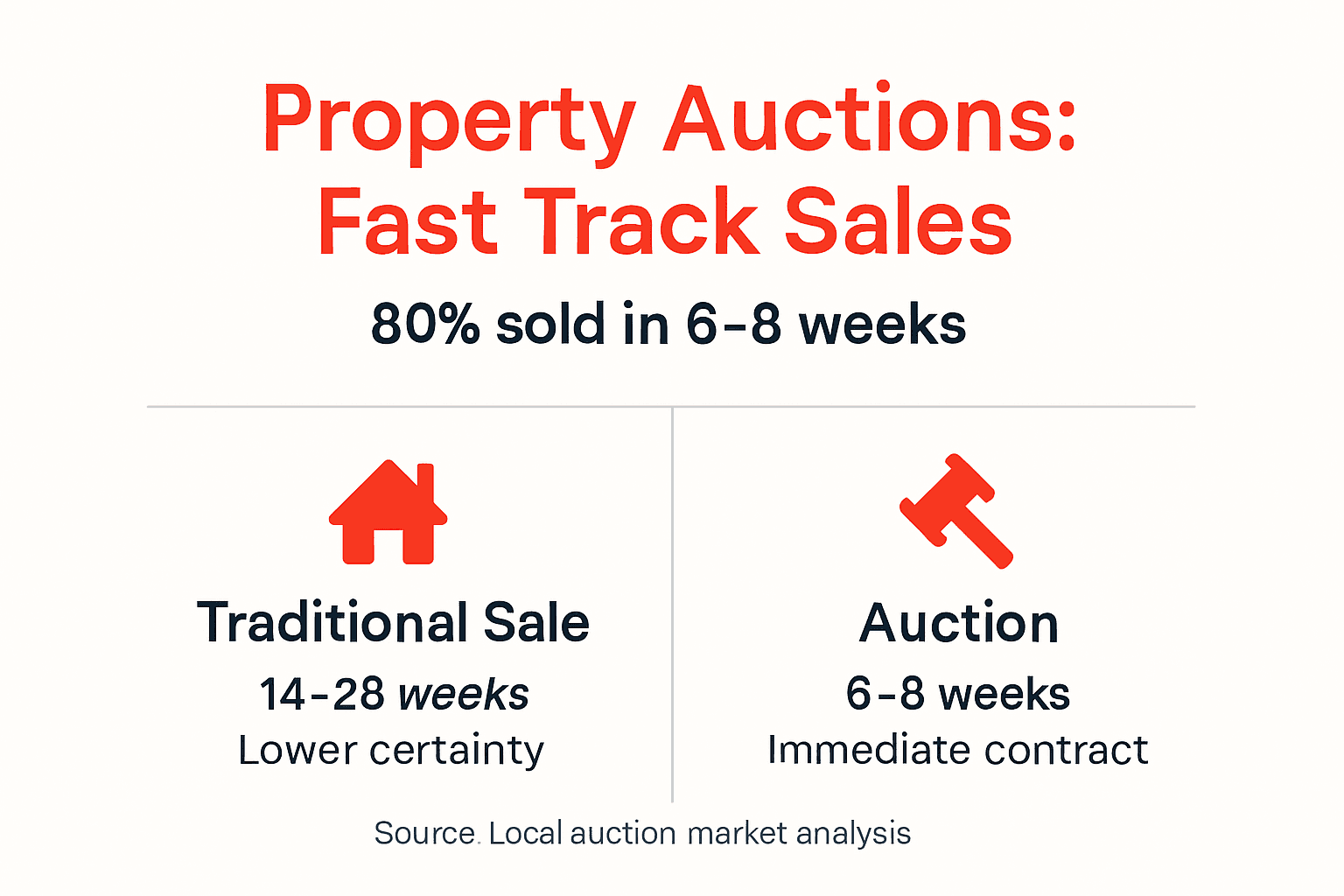
Accelerated Timeline | Auction sales typically complete within 6-8 weeks, significantly faster than the 14-23 week private treaty average. |
Essential Preparation | Success requires complete legal pack preparation and setting realistic reserve prices before auction day. |
Ideal Property Types | Auctions excel for unique properties, those difficult to value conventionally, or time-sensitive sales. |
Introduction to Property Auctions in Co Kildare and Co Dublin
Property auctions follow a structured process. Sellers list their property with an auctioneer, who markets the home widely to attract bidders. On auction day, qualified buyers compete publicly, with the property sold to the highest bidder above the reserve price. The moment the hammer falls, contracts become legally binding immediately, offering sellers certainty impossible with traditional methods.
Auctions are gaining significant traction among sellers in Co Kildare and Co Dublin. The combination of rapid completion and competitive pricing appeals to property owners seeking efficient, transparent sales. Unlike private treaty sales where agreements frequently collapse during the lengthy conveyancing period, auction contracts eliminate this uncertainty.
The auction process steps specific to Ireland provide strong legal protections. Buyers must have deposits ready and commit immediately. Sellers receive genuine purchase certainty rather than non-binding offers that may evaporate weeks or months later.
Core auction features include:
Fixed sale date creating urgency for serious buyers
Public competitive bidding maximizing price discovery
Immediate legally binding contract on hammer fall
Significantly reduced fall-through risk compared to traditional sales
Transparent process visible to all participants
This structure fundamentally changes the power dynamics. Sellers no longer wait anxiously through extended negotiations. Instead, they watch buyers compete in real time, often driving prices beyond initial expectations through the heat of competitive bidding.
How Auctions Create Competitive Prices and Speed Up Sales
Competitive bidding transforms price discovery. When multiple qualified buyers compete publicly, emotional investment and fear of missing out push bids higher. Properties frequently sell above their reserve price as bidders stretch budgets to secure desirable homes. This dynamic particularly benefits unique or attractive properties in sought-after locations across Co Kildare and Co Dublin.
The auction timeline delivers remarkable efficiency:
Marketing period of 3-4 weeks to generate buyer interest
Auction day where bidding establishes final price
Immediate contract exchange with winning bidder
Completion typically within 4 weeks of auction day
Total process of 6-8 weeks from listing to completion
Compare this to traditional estate agent sales. Private treaty transactions average 14-23 weeks from initial listing to completion, with substantial fall-through risk throughout. Many agreed sales collapse during conveyancing, forcing sellers back to square one after months of wasted time.

Auction sales complete within 6-8 weeks because contracts bind immediately. Buyers cannot simply change their minds or renegotiate after winning. This legal certainty compresses timelines dramatically while protecting sellers from the emotional and financial costs of collapsed sales.
Auction pricing benefits include:
True market value discovery through competitive bidding
Bidding urgency encouraging buyers to offer maximum prices
Complete transparency eliminating behind-the-scenes negotiations
Reduced price chipping as buyers cannot renegotiate downward post-auction
Fair competitive process ensuring best available price on the day
Local auction success stories across Co Kildare and Co Dublin property markets demonstrate these benefits consistently. Properties entering auction with realistic reserves and proper marketing regularly achieve strong prices while completing sales in a fraction of traditional timelines. The combination of speed and competitive pricing makes auctions increasingly attractive for sellers prioritizing certainty and efficiency.
Legal Framework and Seller Responsibilities in Property Auctions
Sellers must prepare a comprehensive legal pack before auction day. This documentation bundle includes title deeds, property contracts, Building Energy Rating certificates, planning permissions, and full disclosure of any property issues. Preparing auction legal packs with complete documentation ensures legally compliant sales that proceed smoothly after the hammer falls.
Contracts become legally binding the instant the auctioneer’s hammer falls. This immediate binding nature protects sellers from the fall-through nightmare plaguing traditional sales. Winning bidders cannot simply walk away. They face significant legal and financial consequences for defaulting, creating genuine commitment rare in private treaty transactions.
Setting a realistic reserve price proves critical. The reserve represents the minimum price you will accept. Set it too high, and the property may not sell, wasting marketing investment and momentum. Set it appropriately, and competitive bidding often pushes the final price well above your reserve, maximizing returns while ensuring sale certainty.
Seller responsibilities before auction include:
Complete legal pack assembly with solicitor assistance
Reserve price agreement based on professional valuation and market conditions
Full compliance with property disclosure and documentation requirements
Marketing obligations including viewings and open house arrangements
Final property presentation ensuring attractive condition for buyer inspections
Pro Tip: Start legal documentation preparation at least 6-8 weeks before your intended auction date. Work with solicitors experienced in auction conveyancing to avoid delays that could force auction postponement. Missing documents or title issues discovered late create unnecessary stress and potentially scuttle your sale.
The robust legal framework delivers exceptional certainty. Post-auction fall-through rates remain under 1% due to immediate binding contracts and serious buyer qualification requirements. Compare this to private treaty sales where 25-30% of agreed transactions collapse during conveyancing. Auction sellers trade the possibility of slightly higher prices through extended negotiations for near-certain completion at competitive market prices.
Preparing your home for auction involves both legal compliance and property presentation. Clean, well-maintained properties with complete documentation attract more bidders and achieve stronger prices. The effort invested in proper preparation pays dividends through competitive bidding and smooth post-auction completion.
Common Misconceptions about Selling Property at Auction
Several persistent myths discourage property owners from considering auctions. Understanding the factual reality helps you make informed selling decisions rather than relying on outdated assumptions or hearsay.
Main auction misconceptions include:
Auctions only achieve low prices compared to private sales
Buyers can easily back out after bidding ends
Auctions suit only distressed or problem properties
The auction process lacks transparency or fairness
Sellers lose control over final sale prices
Each myth crumbles under factual scrutiny. Auctions frequently achieve premium prices, particularly for unique properties or those requiring renovation. The competitive bidding environment and bidder psychology often drive prices beyond what private negotiations would yield. Properties entering auction with realistic reserves and proper marketing regularly exceed seller expectations.
The backing out myth misunderstands auction law completely. Once contracts exchange on auction day, buyers are legally committed with no cooling-off period. Default carries severe financial penalties including forfeiture of substantial deposits and potential legal action for additional damages. This binding commitment explains the remarkably low fall-through rate, providing sellers genuine certainty.
Auctions suit a far broader property range than commonly believed. While they excel for unusual properties or those with title complications, standard family homes also sell successfully at auction. The method works whenever competitive bidding benefits price discovery or when sellers prioritize speed and certainty over potentially marginally higher prices through extended private negotiations.
Auction sales deliver legally binding contracts immediately after the hammer falls, providing sellers certainty of sale unlike traditional methods where transactions frequently collapse post-agreement, wasting months of time and creating significant emotional and financial stress.
The transparency concern inverts reality. Auctions provide complete visibility. All participants see every bid in real time. No behind-the-scenes negotiations or preferential treatment exists. The highest bidder wins, period. This transparency ensures fair market pricing and eliminates the opacity often plaguing private treaty sales.
Sellers retain control through reserve price setting. You determine the minimum acceptable price before auction day. If bidding fails to reach your reserve, you are not obligated to sell. This protection ensures you never accept inadequate prices while still benefiting from competitive bidding when market conditions support strong prices. Auction suitability varies by property characteristics, but misconceptions should not prevent informed consideration.
When Is Auction the Right Choice for Your Property?
Assessing auction suitability requires honest evaluation of your property characteristics, market conditions, personal timeline, and selling priorities. Not every property or situation benefits equally from auction selling, but many more do than most owners realize.
Key evaluation criteria include:
Property uniqueness or difficulty in conventional valuation
Current title status and any complications requiring disclosure
Local market demand and recent comparable sales
Your urgency timeline and need for completion certainty
Property condition and appeal to competitive buyers
Factor | Favors Auction | Favors Private Treaty |
Sale Speed | 6-8 weeks total timeline | 14-23 weeks average timeline |
Price Certainty | Competitive bidding, binding immediately | Negotiation flexibility, higher fall-through risk |
Buyer Competition | Public bidding maximizes competition | Sequential private negotiations |
Legal Risk | Under 1% fall-through rate | 25-30% fall-through rate |
Property Type | Unique, renovation-needed, hard-to-value | Standard properties with clear comparables |
Market conditions significantly impact auction success:
Strong buyer demand in Co Kildare and Co Dublin increases bidding competition
Properties in desirable locations attract multiple serious bidders
Transparent legal title and property documentation reassures buyers
Adequate marketing period generating sufficient buyer interest before auction day
Realistic reserve pricing aligned with current market values
Risk factors and limitations deserve consideration. Unrealistic reserve prices can result in properties failing to sell, wasting marketing investment and potentially stigmatizing the property. Insufficient pre-auction marketing may limit bidder attendance, reducing competitive pressure and final prices. These risks are manageable through professional guidance but require acknowledgment.
Properties with title or planning complications often sell effectively via auction using special contract conditions. Transparent disclosure of such issues within the legal pack allows auction contracts to proceed where private buyers might walk away during conveyancing. This flexibility makes auctions particularly valuable for properties traditional estate agents struggle to sell.
Honest self-assessment proves essential. If your property offers unique features difficult to value through comparable sales, auction bidding discovers true market value efficiently. If you need certainty by a specific date for job relocation, estate settlement, or financial planning, the compressed auction timeline and binding contracts deliver reliability impossible through traditional sales. Local auction market conditions in Co Kildare influence success rates and appropriate reserve pricing.
Practical Steps to Prepare Your Home for Auction in Co Kildare and Co Dublin
Successful auction sales require thorough preparation across legal documentation, pricing strategy, marketing execution, and property presentation. Each element contributes to maximizing bidder attendance and final sale price.
Key preparation steps include:
Compile complete legal pack including title documents, contracts, and BER certificate at least 6 weeks before auction
Set realistic reserve price with experienced auctioneer based on professional valuation and market analysis
Market property extensively across multiple channels to attract maximum bidder pool
Arrange multiple open houses and private viewings allowing thorough buyer inspection
Conduct auction professionally with qualified bidders and enforce immediate binding contracts
Each step deserves careful attention. The legal pack must include comprehensive documentation satisfying buyer solicitors that title is clear and property information is complete. Missing documents discovered late can force auction postponement, destroying momentum and wasting marketing investment.
Reserve price setting balances protection and market reality. Set the reserve at the absolute minimum price you will accept, informed by professional valuation. Resist the temptation to inflate reserves based on emotional attachment or unrealistic expectations. Properties with appropriate reserves sell reliably, often exceeding reserves through competitive bidding. Overpriced reserves result in unsold properties and significant disappointment.
Marketing reach directly impacts bidder attendance and competitive intensity. Extensive online presence, targeted advertising in Co Kildare and Co Dublin property channels, professional photography, and detailed property descriptions all contribute to generating serious buyer interest. The marketing period typically runs 3-4 weeks, providing sufficient time for buyers to inspect, arrange financing, and commit to bidding.
Pro Tip: Engage experienced auction solicitors and auctioneers from the outset rather than attempting DIY preparation or working with professionals unfamiliar with auction processes. Their expertise prevents costly mistakes in documentation, pricing, and marketing that could undermine your sale.
Property presentation significantly influences bidding psychology. Clean, decluttered homes allowing buyers to envision themselves living there generate stronger emotional responses. Address obvious maintenance issues and ensure the property shows at its absolute best during viewings. First impressions established during open houses directly impact bidding enthusiasm and final prices.
Common pitfalls include unrealistic reserves disconnected from market reality, incomplete legal documentation forcing last-minute scrambles, and insufficient marketing failing to generate adequate bidder pools. All are preventable through early preparation and professional guidance. The investment in proper preparation for auction sale returns multiples through successful sales at competitive prices with minimal stress.
Explore RE/MAX Partners’ Auction and Property Sales Services
Navigating property auctions and traditional sales in Co Kildare and Dublin requires local market expertise and professional guidance. RE/MAX Partners combines comprehensive auction knowledge with deep understanding of local property markets to help you achieve successful sales.

Our experienced team assists with pricing strategy, professional marketing, legal preparation, and auction execution to maximize your sale success. Whether auction selling suits your property or traditional methods better serve your goals, we provide honest assessment and expert support throughout the process.
Contact RE/MAX Partners to discuss selling your home and receive a comprehensive auction suitability evaluation. Our local property selling services leverage extensive market knowledge and proven marketing systems to attract qualified buyers and achieve strong prices. We also offer detailed home selling preparation guidance ensuring your property presents optimally regardless of selling method chosen.
Frequently Asked Questions about Selling Property at Auction in Co Kildare and Co Dublin
What happens if the reserve price is not met at auction?
If bidding fails to reach your reserve price, you are not obligated to sell. The property remains unsold, and you can negotiate privately with the highest bidder, adjust the reserve for a future auction, or pursue alternative selling methods. No sale occurs unless your minimum price is achieved.
How soon after the auction does the sale complete?
Completion typically occurs within 4 weeks of the auction date, making the total timeline 6-8 weeks from initial listing. The binding contract agreed on auction day specifies the exact completion date, providing certainty for planning your move and financial arrangements.
Can I sell a property with planning or title issues at auction?
Yes, auctions handle complicated properties effectively through special contract conditions and transparent disclosure in the legal pack. Buyers receive full information before bidding, and tailored contract terms address specific issues, making sales possible where traditional methods often fail.
What costs should sellers expect when selling via auction?
Sellers pay auctioneer fees typically ranging from 1.5-2.5% of sale price plus VAT, solicitor conveyancing fees, marketing costs including advertising and professional photography, and BER certificate expenses if required. Total costs generally align with traditional estate agent sales.
Is the sale price at auction negotiable after the hammer falls?
No, the sale price is absolutely final when the hammer falls. The binding contract agreed at that moment cannot be renegotiated by either party. This certainty protects sellers from price chipping while ensuring buyers cannot simply change their minds or demand discounts post-auction.
Recommended


Comments